
Every Teacher is a Teacher of SEND
Often, this is easier said than done.
The phrase “every teacher is a teacher of SEND” comes from the SEND Code of Practice (2014). It emphasises the responsibility that all teachers share in supporting every learner, regardless of their individual needs.
Never has this principle felt more relevant than it does today. In 2026, schools are navigating increasingly complex challenges as they work to meet the diverse and sometimes profound needs of pupils within mainstream settings.
“Most of the others will be able to do this, so just give Jake the iPad for a bit.”
Across many schools, new spaces are emerging in response. ‘Hubs’, ‘Dens’, ‘Woodland Rooms’, and rooms in every colour of the rainbow are becoming familiar features. These dedicated spaces aim to provide targeted support for pupils who need quieter environments, additional regulation, or more specialised learning approaches during the school day.
“Kai’s a bit unsettled today, just pop him into the Rainbow Room for the afternoon.”
The new ‘rooms’
In some schools, these provisions are working well. Staff have created thoughtful, nurturing environments that genuinely support pupils to succeed.
However, the reality is that in many settings staff are struggling. The reasons are varied – limited time, limited training, or uncertainty about how best to structure these spaces so they truly meet pupils’ needs.
Sometimes the hardest part is simply knowing where to begin. And when something doesn’t seem to be working, it can be difficult to identify the next step. Understanding potential pitfalls ahead of time would certainly make the journey easier.
To run and manage these provisions well is expensive. Rooms need the right resources – both physical and digital, but they also need the right human resources, equipped with the skills to do the job.
“We still can’t get anyone permanent for the Hub…”
Getting the right human resources
In many ways, getting the human element right is the bigger challenge.
A room, no matter how well designed, cannot succeed without skilled and confident staff. The adults working within these spaces need the knowledge, strategies and support to respond effectively to the needs of the pupils they work with every day.
There is nothing particularly new or revolutionary in this idea. In any profession, when people feel well prepared, well supported and confident in their role, job satisfaction increases, stability improves, and outcomes are more positive for everyone involved.
The same is true in SEND provision. When staff feel equipped for the task, both they and their pupils are far more likely to thrive.
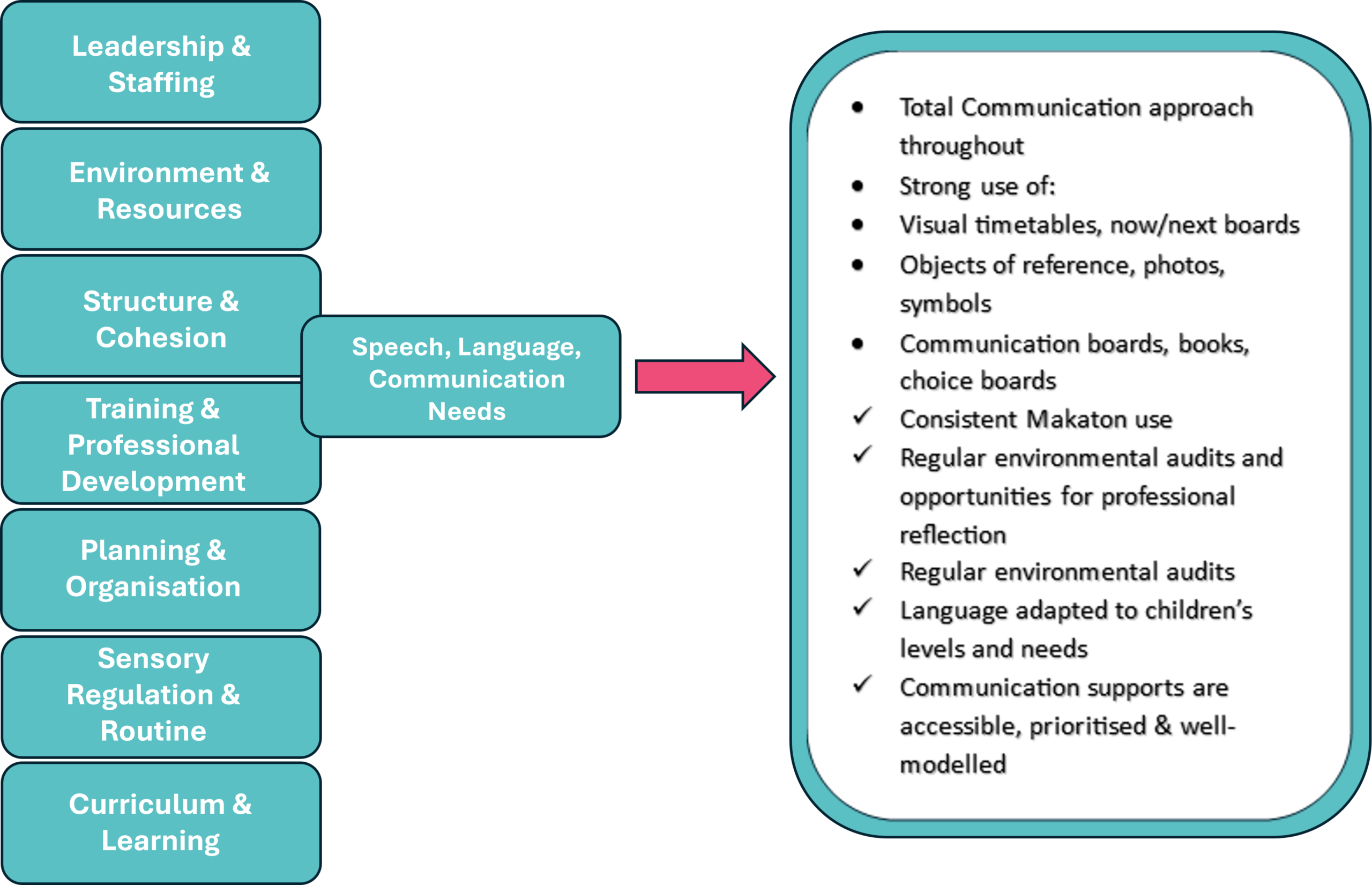
Here are some key areas to consider when creating these ‘Rooms’. They are in no particular order, and no single area is more important than the next.
New training options coming soon!
Look out for the new Soundswell training options to help you invest in your Hub, and the staff responsible for ‘making a positive difference for children with SEND’.
Ofsted Early Years Inspection Toolkit, 2025
Early years inspection: toolkit, operating guide and information – GOV.UK
1. Leaders and practitioners identify children’s emerging or changing needs quickly and accurately and make sure that children receive effective support, drawing on and implementing specialist guidance, when necessary.
2. Leaders and practitioners meet the needs of children with SEND and adapt the environment, teaching and the settings wider offer in ways to support these children to access education.
Contact jo@soundswellspeech.com or diana@soundswellspeech.com to find out more about our brand new training options to support you and your school.